Duterte Case

The Prosecutor v. Rodrigo Roa Duterte
ICC-01/21-01/25
Image
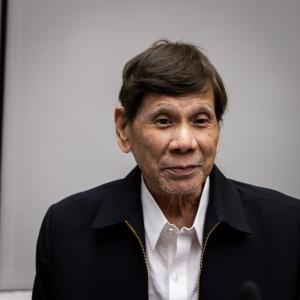
Rodrigo Roa Duterte
In ICC custody

Rodrigo Roa Duterte

Mr Rodrigo Roa Duterte, born on 28 March 1945 and a national of the Republic of the Philippines. President of the Philippines, Mayor of Davao City, Vice Mayor of Davao City, and allegedly the founder and head of the Davao Death Squad (‘DDS’), at the time of the relevant conduct.

Arrest warrant issued on 7 March 2025

Allegedly responsible for the crimes against humanity of murder and attempted murder, allegedly committed on the territory of the Republic of the Philippines between 1 November 2011 and 16 March 2019 in the context of the ‘war on drugs’ campaign.

  • On 10 February 2025, the Office of the Prosecutor of the ICC applied for an arrest warrant against Mr Duterte for the crimes against humanity of murder, torture and rape. ICC Pre-Trial Chamber I (“the Chamber”) assessed the material submitted by the Prosecution and found reasonable grounds to believe that Mr Duterte is individually responsible as an indirect co-perpetrator for the crime against humanity of murder, allegedly committed in the Philippines between 1 November 2011 and 16 March 2019.

    The warrant of arrest against Mr Duterte was issued by the Chamber as “Secret” on 7 March 2025 and reclassified as “Public” on 11 March 2025. On 12 March 2025, Mr Duterte was surrendered to the International Criminal Court after being arrested by the authorities of the Republic of the Philippines in accordance with the warrant of arrest.

    The initial appearance of Mr Duterte took place on 14 March 2025. Mr Duterte appeared in the hearing via video link, as authorised by the Chamber. On 8 September 2025, Pre-Trial Chamber I postponed  the commencement of the confirmation hearing in the case, which had been initially scheduled to start on 23 September 2025.

    Following a request from the Defence of Mr Duterte for an indefinite adjournment of the proceedings alleging that Mr Duterte is not fit to stand trial, the majority of the Chamber considered that a limited postponement of the hearing on the confirmation of charges was warranted to allow sufficient time to adjudicate the request and related matters.

    On 26 January 2026, Pre-Trial Chamber I found Mr Rodrigo Roa Duterte fit to take part in the pre-trial proceedings and rejected the Defence’s request for an indefinite adjournment. Having regard to the relevant legal principles, the medical assessment of a panel of three independent medical experts and all of the relevant circumstances of the case, the Chamber was satisfied that Mr Duterte is able effectively to exercise his procedural rights and is therefore fit to take part in the pre-trial proceedings, which are thereby resumed.

    The confirmation of charges hearing took place from 23 to 27 February 2026. After hearing the oral submissions of the Prosecutor, the Common Legal Representatives of the Victims and the Defence, the judges heard their respective closing statements. The hearing on the confirmation of charges took place in the absence of the suspect following the Chamber granting Mr Duterte's request to waive his right to attend the hearing.

    On 23 April 2026, Pre-Trial Chamber I unanimously confirmed all the charges comprised of three counts of crimes against humanity brought by the Prosecutor against Rodrigo Roa Duterte and committed him to trial before a Trial Chamber.

    Next steps: The opening of the trial is scheduled for 30 November 2026. Before the opening of the trial, the Chamber will address all pending matters and adopt the procedures necessary to facilitate the fair and expeditious conduct of the proceedings. Practical information for the trial proceedings, including webstreaming and possible attendance, will be circulated closer to the trial date. 


    Press release

    Public redacted version of ‘Decision on the confirmation of charges against Mr Rodrigo Roa Duterte’

    Information for victims

Trial Chamber III

Judge Joanna Korner (Presiding)
Judge Keebong Paek
Judge Nicolas Guillou

Office of the Prosecutor

Mame Mandiaye Niang, Deputy Prosecutor

Defence

Peter Haynes KC, Lead Counsel
Kate Gibson, Associate Counsel

Legal Representatives of the Victims

Joel Butuyan
Gilbert Andres
Paolina Massidda

Opening of the trial in the Duterte case, 30 November 2026

Print version: EnglishFrançais

Rodrigo Roa Duterte, born on 28 March 1945 and a national of the Republic of the Philippines, is the former President of the Philippines, Mayor of Davao City, Vice Mayor of Davao City, and allegedly the founder and head of the Davao Death Squad (‘DDS’), at the time of the relevant conduct. Mr Duterte is accused of the crimes against humanity of murder and attempted murder, pursuant to article 7(1)(a) of the Rome Statute (ICC’s founding treaty). These crimes were allegedly committed as part of a widespread and systematic attack against a civilian population on the territory of the Republic of the Philippines between 1 November 2011 and 16 March 2019 in the context of the “war on drugs” campaign.

Specifically, Mr Duterte is charged with murder as a crime against humanity in Davao City during the Mayoral period, between 2013 and around June 2016 (Count 1); murder as a crime against humanity of ‘High-Value Targets’ in locations across the Philippines during the Presidential period between around July 2016 and July 2017 (Count 2); and murder and attempted murder as crimes against humanity in barangay clearance operations in locations across the Philippines during the Presidential period between around July 2016 and September 2018 (Count 3).

The trial will open on 30 November 2026 before Trial Chamber III and hearings are scheduled from 30 November 2026 onwards. The Judges will first verify that Mr Duterte understands the nature of the charges and will ask him whether he makes an admission of guilt or pleads not guilty to the charges. The Chamber will then hear the opening statements of the Prosecution, the Common Legal Representatives of the Victims (CLRVs) and, if it so requests, the Defence. The Prosecution and CLRVs have been granted 6 hours and 3 hours, respectively, to present their opening statements These opening statements will be made across four hearing sessions per day: 10:00 -11:00, 11:30-12:30, 13:30-14:30, and 15:00-16:00 (the Hague local time). Following the opening statements, the first Prosecution witness is scheduled to begin testifying. The first five Prosecution witnesses are expected to testify before the Winter Judicial Recess, which is scheduled to commence on 18 December 2026. The Prosecution currently anticipates calling approximately 100 witnesses.

Following the presentation of the Prosecution’s case, which is expected to extend over several months of hearings, the CLRVs may submit observations, and the Defence will have the opportunity to present its case and call witnesses. At the end of the trial hearings, the Judges will render their judgment within a reasonable period of time. The Trial Chamber will convict someone only if it is satisfied that the charges have been proven beyond reasonable doubt. The verdict will be read out in public and will either acquit or convict the accused. If the accused is convicted, a sentence will be imposed on him. The Prosecution and the Defence may appeal the judgement and/or the decision on sentencing before the ICC’s Appeals Chamber.

The trial may last several years, depending on the complexity of the case and challenges that may arise. Judges ensure that the rights of all parties and participants are respected. Cases involving crimes against humanity tend to be complex, because of the range of incidents and extended time period involved in the charges, as well as other logistic and linguistic measures that have to be taken to protect the accused’s rights, protect the witnesses and facilitate the victims’ participation. The Judges are committed to expediting the trial as much as possible.

Mr Duterte is represented by his Lead Counsel Peter Haynes KC, his Associate Counsel Kate Gibson, and his Defence team. Mr Duterte is presumed innocent and is entitled to several rights during the trial proceedings, including:

  • to be defended by the counsel (lawyer) of his choice, present evidence and witnesses of his own and to use a language which he fully understands and speaks;
  • to be informed in detail of the charges in a language which he fully understands and speaks;
  • to have adequate time and facilities for the preparation of his defence and to communicate freely and in confidence with his Counsel;
  • to be tried without undue delay;
  • not to be compelled to testify or to confess guilt and to remain silent, without such silence being a consideration in the determination of guilt or innocence;
  • to have the Prosecutor disclose to the Defence evidence in the Prosecutor’s possession or control which he or she believes shows or tends to show the innocence of the accused, or to mitigate the guilt of the accused, or which may affect the credibility of prosecution evidence.

Yes, on 8 October 2026, the Chamber found that Mr Duterte is fit to stand trial and adopted measures to facilitate his participation. The Chamber was satisfied that he can effectively exercise his fair trial rights in the proceedings, based on the findings of an independent Panel of Experts and submissions from the parties and participants. The Expert Panel found that Mr Duterte has the capacity to understand the charges, understand the purpose and the consequences of the proceedings, follow the course of the proceedings, including the nature and implications of entering a plea, understand the evidence, and instruct counsel in the preparation and conduct of his defence. The Chamber instructed the Registry to ensure that the Medical Officer at the Court’s Detention Centre continuously monitors the Accused’s health and immediately informs the Chamber of any changes in the Accused’s medical condition.

Mr Duterte is not indigent for the purposes of the Court’s legal aid system. He therefore bears the costs of his defence in the proceedings before the Court.

The Judges may impose a prison sentence, to which may be added a fine or forfeiture of the proceeds, property and assets derived directly or indirectly from the crime committed. The maximum sentence is 30 years. However, in extreme cases, such as the specific circumstances of the accused conviction, the Court may impose a term of life imprisonment. There is no death penalty at the ICC. Both the Prosecution and the Defence may appeal the sentencing decision before the ICC Appeals Chamber. Persons convicted by the ICC do not serve their sentences at the ICC Detention Centre, which is not designed for long-term imprisonment. Instead, they are transferred to a prison in a State designated by the Court from a list of States willing to accept convicted persons.

To date, the Judges have authorized more than 500 victims to participate in the proceedings, and more victims may apply and be authorised to participate in the trial. The judges have appointed lawyers Joel Butuyan and Gilbert Andres, as well as Paolina Massidda of the Court’s Office of Public Counsel for Victims, to act as a single team of common legal representatives for the participating victims. The Legal Representatives of victims may access and consult case documents, receive notifications of new filings, attend both public and private hearings, submit written observations on matters affecting the personal interests of victims, make opening statements and final written submissions before the verdict, present evidence and express the victims’ views and concerns, and question witnesses.

The ICC Registry is collecting applications from victims wishing to seek reparations in this case. The matter of victims’ reparations will be addressed by the Judges only if the accused is found guilty, at the end of the trial. Following the conviction, the Trial Chamber may hold a convicted person liable to repair the victims’ harm caused as a result of the crimes of which the person was found guilty. Reparations are intended to address the harm suffered by victims and may include monetary compensation, restitution of property, rehabilitation, satisfaction, or symbolic measures. The Judges may order reparations on an individual or collective basis, depending on what is most appropriate for the victims in the particular case. Where the convicted person lacks sufficient financial resources to comply with a reparations order, the Judges may invite the Trust Fund for Victims to use its own resources to implement the reparations order, in accordance with its mandate and the applicable legal framework.

Since his transfer to the ICC on 12 March 2025, Mr Duterte has been detained at the ICC Detention Centre in Scheveningen, in The Hague, The Netherlands. The Detention Centre functions to hold detained persons in safe, secure and humane custody. It operates in conformity with the highest international human rights standards for the treatment of detainees, such as the United Nations Standard Minimum Rules for the Treatment of Prisoners. Detained persons are presumed innocent until proven guilty.

Trial Chamber III is composed of Presiding Judge Joanna Korner, Judge Keebong Paek and Judge Nicolas Guillou. The ICC Judges are persons of high moral character, impartiality and integrity who possess the qualifications required in their respective States for appointment to the highest judicial offices. All have extensive experience relevant to the Court’s judicial activity. The Judges are elected by the Assembly of States Parties on the basis of their established competence in criminal law and procedure and in relevant areas of international law such as international humanitarian law and the law of human rights.

In addition to the proceedings against Mr Duterte, the Office of the Prosecutor of the ICC continues investigation into the situation in the Philippines. Opened on 15 September 2021, it focuses on crimes allegedly committed as part of a widespread and systematic attack against civilian population on the territory of the Philippines between 1 November 2011 and 16 March 2019, in the context of the so-called “war on drugs” campaign. While conducting its investigation, the Office continues to pursue investigative activities and engage with all relevant stakeholders. As part of its ongoing and active investigation, the Office of the Prosecutor encourages individuals with relevant information to come forward. They can do so through the following secure channel: https://appeals.icc-cpi.int (in English and Filipino). The investigation has also resulted in an arrest warrant application for former Chief of the Philippine National Police Dela Rosa. The warrant of arrest for Mr Dela Rosa was unsealed in May 2026. Mr Dela Rosa remains at large.

At the ICC, witnesses and participating victims, including participating victims, have different roles. Witnesses give evidence in Court to help establish the facts of a case. They may be eyewitnesses, people with inside knowledge, or experts. Victims could also be witnesses or being authorised by the judges to appear and present their own views before the Court. Participating victims have a different role. They have suffered harm from crimes related to the case and have been granted the right to participate by the judges. Participating victims are represented by their own representative/lawyer in the courtroom who represents theirs views and concerns.

The ICC has an obligation to take appropriate measures to protect the safety, physical and psychological well-being, dignity and privacy of victims and witnesses. This obligation starts at the investigative stage, and continues throughout the judicial proceedings. In relation to the trial against Mr Duterte, witnesses will be giving evidence to help judges establish the truth and ensure justice is done. To protect witnesses from potential harm, judges can order special protection measures allowing witnesses to testify with certain in court protective measures, for example, blurring a witness’s face, changing their voice, or using a code name to keep their identity confidential. These measures are subject of requests to and approval of the judges, and are based on individual security and vulnerability assessments of a witness. Requests for protective measures in the Courtroom can be submitted for all witnesses who testify before the judges; regardless of whether they are called by the Prosecution, the Defence, or the victim representative/lawyer, when there are concerns for their safety, security or well-being.

Intimidating or interfering with witnesses at any stage of the investigations or the proceedings can constitute an offence against the administration of justice at the ICC. In the past, these offences have resulted in prosecutions. Confidentiality of protected witnesses and their identities must be respected. Respecting witnesses means respecting the justice process.